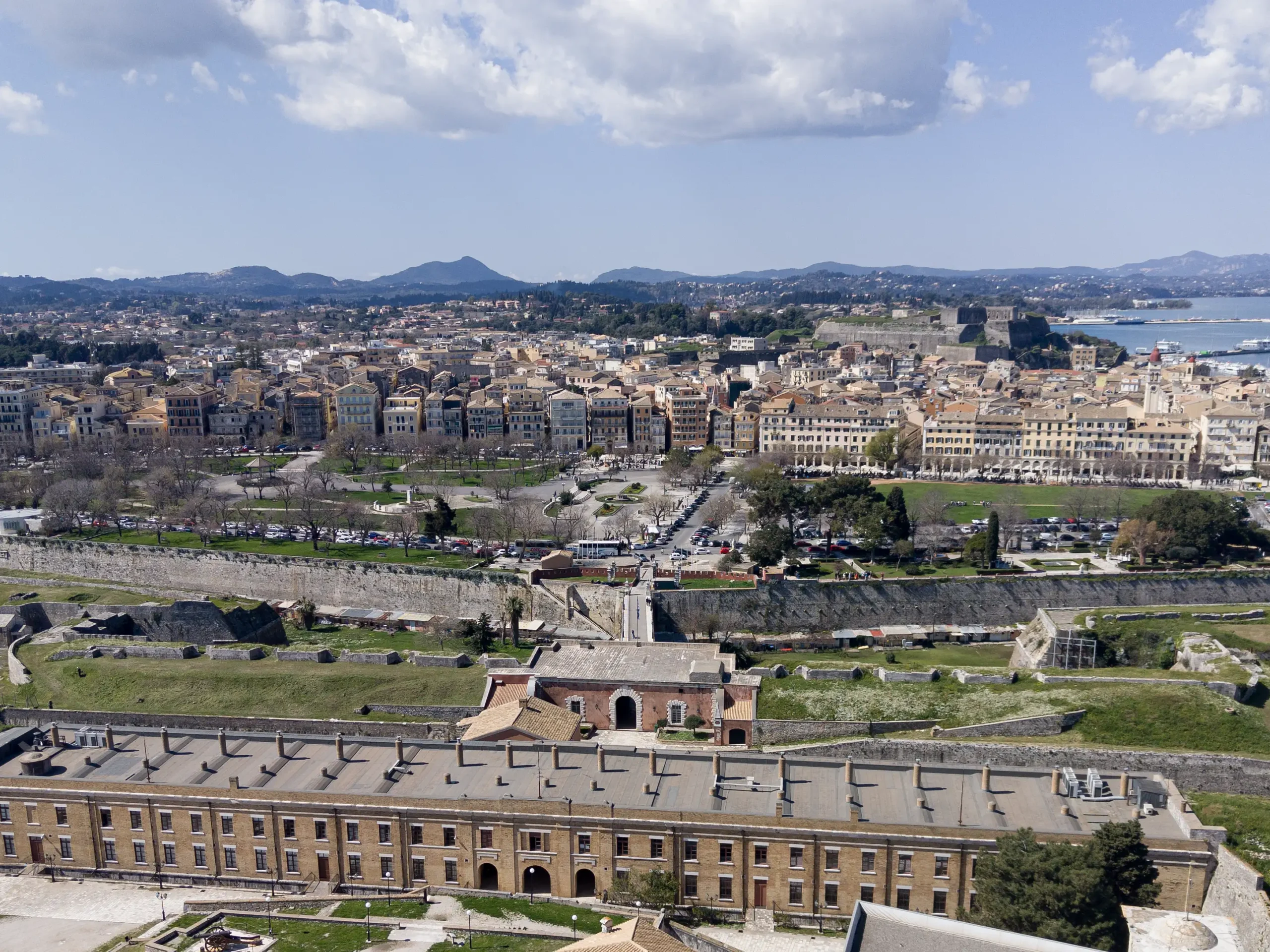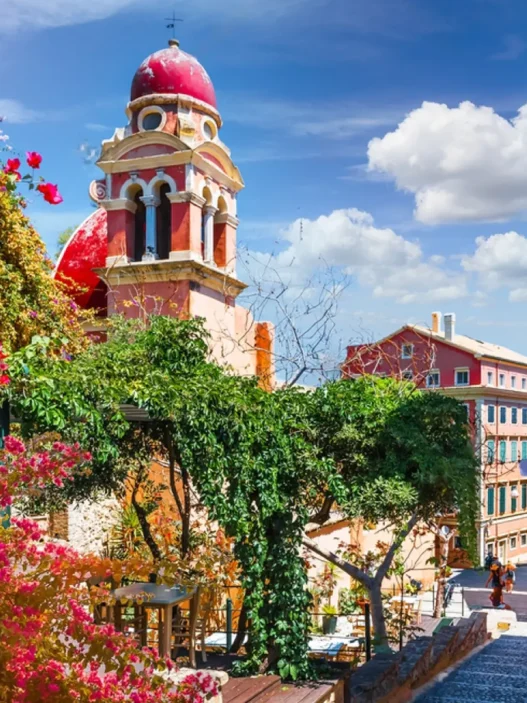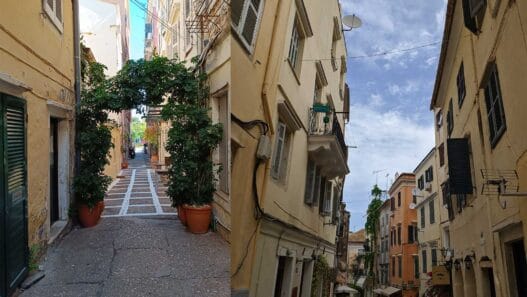

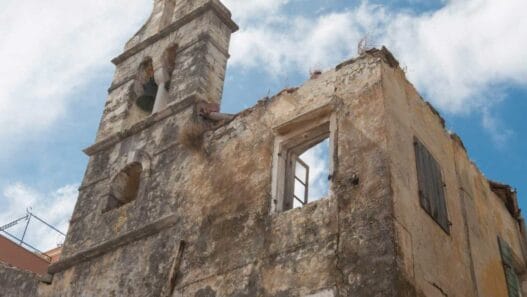


The island of Corfu is distinctly known for its old town. The tall buildings, the narrow streets, and the whole architectural structure, influenced by the Venetians, create a unique setting that enchants locals and tourists alike. The old town of Corfu has been a UNESCO World Heritage Site since 2007. Its unique identity has been greatly influenced by the Venetians, the French, and the British. Thus, the urban fabric is composed of buildings that count at least two centuries of life.
The first settlement and later city developed on the peninsula of Paleopolis south of the present town. This city experienced impressive growth but was abandoned in the 6th century AD after raids by the Goths. Thus, the naturally fortified site of the Old Fortress was chosen, and the medieval Korifo was developed on the spot. The present-day old town is first encountered as a growing settlement outside the walls of the Old Fortress called ‘xopoli’ (borgo)-(outskirts). Gradually, and during the early years of the Venetian occupation, this settlement developed further and became the essential urban fabric, with the Old Fortress adopting a purely defensive character. The old town was fortified and acquired some of the characteristics it retains today. The history of the old town of Corfu is characterized by many glorious but also unfortunate moments. Indicative are the many sieges it has suffered, but also the tragic effects of the bombings of the Second World War.
Nowadays, the old town of Corfu maintains the unique character it has acquired over the years, with each neighborhood having inimitable characteristics, history, and aura. The old town is practically divided into nine districts. The best known is the historic center, which includes all the major and commercial streets of the old town. A district of unique beauty is that of Campielo. Campielo is one of the best-preserved districts of Corfu’s old town, maintaining to this day its pure beauty. Another particularly famous district is Spilia or Agioi Apostoloi, known for its beautiful narrow streets and excellent dining options.
Furthermore, we should also mention the district of Porta Remunda, a distinctive neighborhood home to the Ionian Academy. In addition, the Jewish quarter, or as it is referred to on the island, “Ovriaki” has a special place in the history of Corfu, with the unique atmosphere it still offers today. Other districts of the old town are those of Tenedos, Kofineta, Agios Athanasios, and Agioi Pateres.
The old town has many sights and monuments that testify to the remarkable development of culture that Corfu has experienced in recent centuries. Apart from the well-known Old and New Fortress, the old town hosts the Palace of Archangel Michael and St. George and many other important buildings and monuments. Of particular importance are the Church of St. Spyridon, the patron saint of the island, and the Church of the Mitropolis (Cathedral) of Corfu. Furthermore, the beautiful San Giacomo, the old town hall, is a unique example of architecture. There are many buildings of high historical importance scattered around the historic center, each waiting to be discovered individually. Of course, the old town also covers all modern needs, from accommodation, entertainment, and fun to fine restaurants emphasizing on tradition and quality.
The old town of Corfu emits a special aura. Every street, every canteen, has a unique history. Each building has played its role over time. Moreover, the population forms the human potential that preserves, reproduces, and reshapes Corfu’s customs and traditions. This particular part of the island is the center of everything, and it is certainly worth discovering and studying in depth. Besides, the information, knowledge, and secrets you will uncover are sure to surprise you.