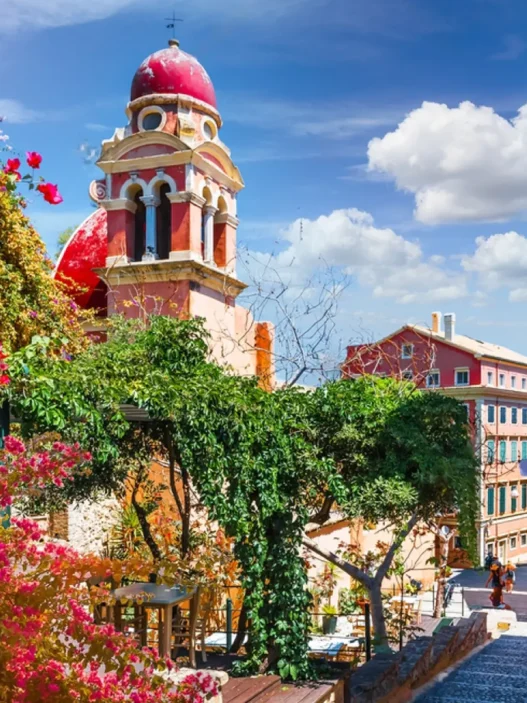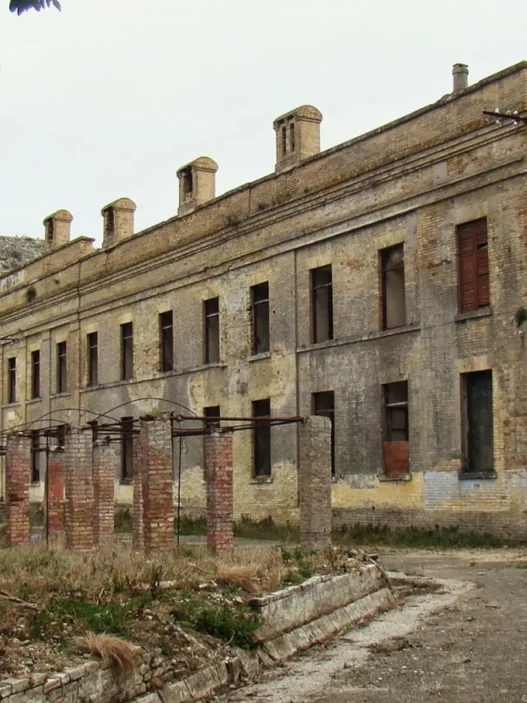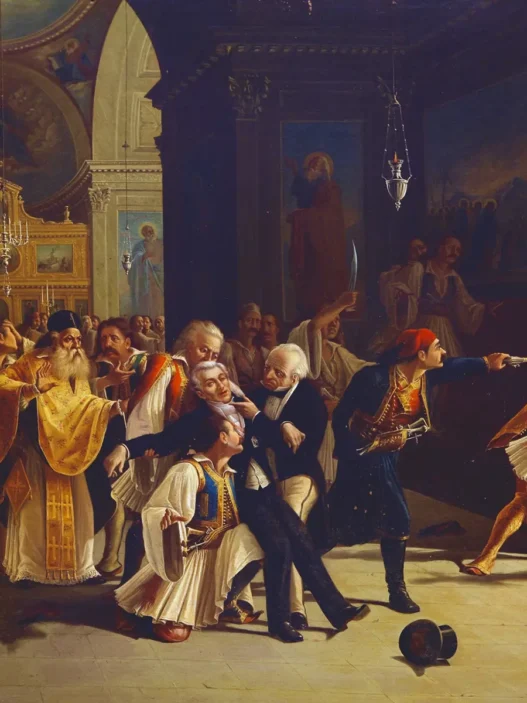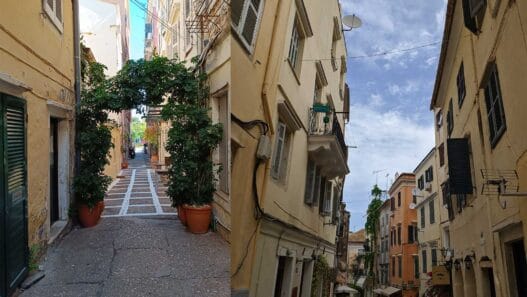



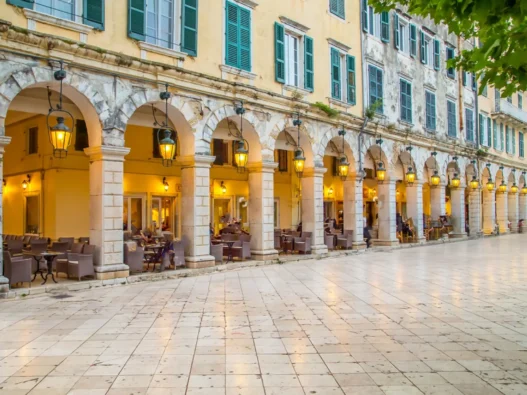
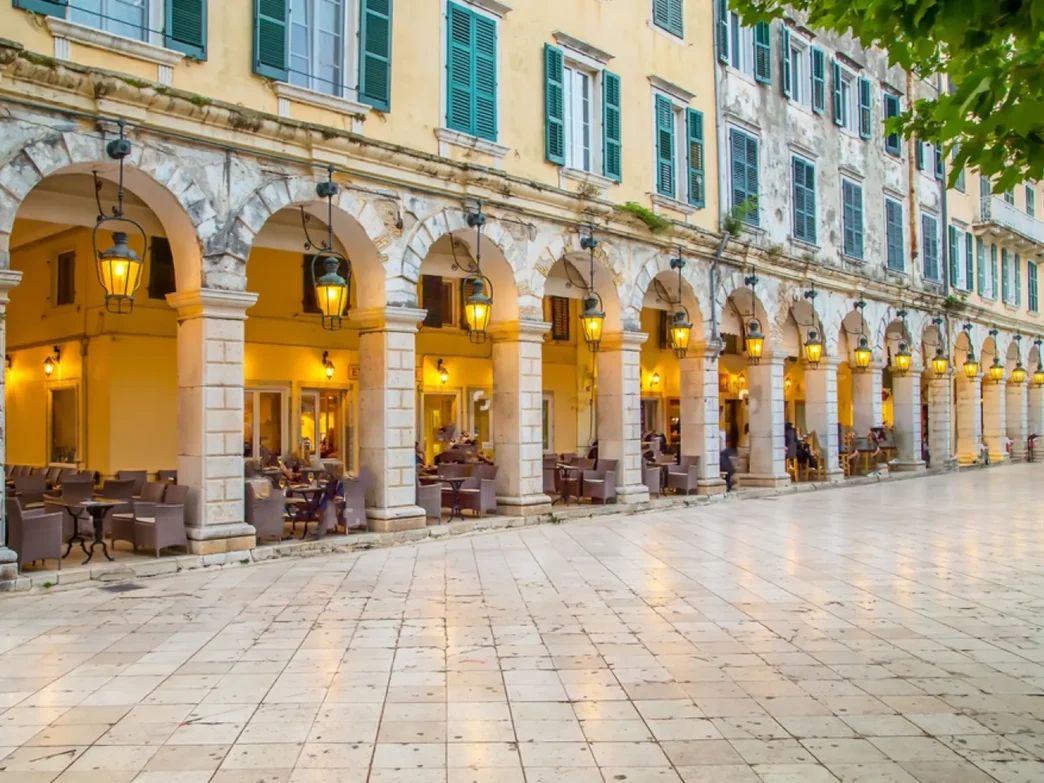
Corfu hosts significant buildings and architectural monuments throughout the old town, making it an ideal destination for those who wish to appreciate better the unique combination of Venetian, French, and English culture and art and how it has been influenced by Corfiot and, by extension, Greek everyday life and temperament. A unique example is the Liston, a distinctive building and street of the French era that has played a unique role in the history of Corfu.
The construction of the Liston began in the first decade of the 19th century and took several years to complete. The French wanted to construct a building at the western end of the Spianada square with a motif and design similar to that of the rue de Rivoli in Paris, so they commissioned Mathieu de Lesseps to complete this project. The Liston originally consisted of a primary building complex, the floors of which were gradually added during the English occupation. Over the years, the building has been home to some of the island’s most famous hotels. They hosted great Greek personalities such as Konstantinos Cavafy and Dionysios Solomos.
The basis of the name ‘Liston’ is not attributed to a specific source but to a combination of elements and characteristics. More specifically, according to the Venetians, the word ‘Liston’ was used to designate a main street, a square, or part of a square. On the other hand, many scholars argue that the word Liston comes from the phrase list on, on list. This could have come from the Libro d’Oro, the golden bible of the nobility where only those who were allowed to walk the Liston were inscribed.
Of course, the concept of the Liston is also found in other countries and cities, such as Belluno, Ferrara, Padova, and Rovigo. Thus, these main streets and squares follow the Liston logic, giving them a unique character and importance. After all, it is no coincidence that the well-known Venetian phrase “fare el Liston” translates as “let’s go for a walk on the central-most important street of the city.”
One of the main features of the building complex is the beautiful “arches” that connect one column to the other. In the local dialect, they are called “Volto” and are directly influenced by neoclassicism, as they symbolize the stability and prosperity of the city. ”Volto” is one of the best-known idiomatic words used by Corfiots in everyday life. The “Volto” is not only a meeting point but also an occasion for socializing, especially in earlier years when the city’s inhabitants observed and commented on events that took place to inform and gossip using their well-known temperament.
Today, the Liston is present at some of Corfu’s most vital moments and events. Its contribution is significant during the days of Easter, when, throughout Holy Week, its lights take on an extraordinary, spectacular purple mourning hue that evokes awe and emotion. Furthermore, on Holy Saturday, the balconies of the building host the locals and visitors who throw the well-known “Botides,” the ceramic pots, the crashing sound of which is intended to drive away evil during the so-called first Resurrection. Additionally, the Liston is a landmark for walking, having coffee, and enjoying a drink for both Corfiots and tourists, offering unique moments of relaxation and carefree enjoyment in the historic center of the city. With the historical buildings on one side and the Spianada Square on the other, the Liston merges nature and architecture in a unique combination.
This unique attraction of Corfu remains constantly relevant, influencing the lives of locals and visitors, reminding them of the island’s one-of-a-kind history and the value of its preservation even nowadays.