
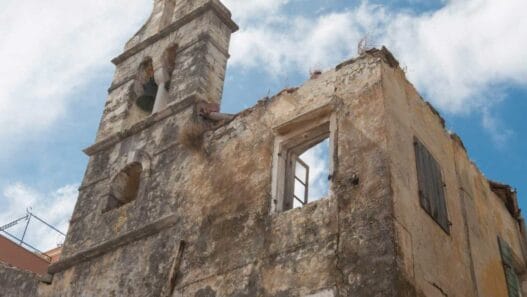


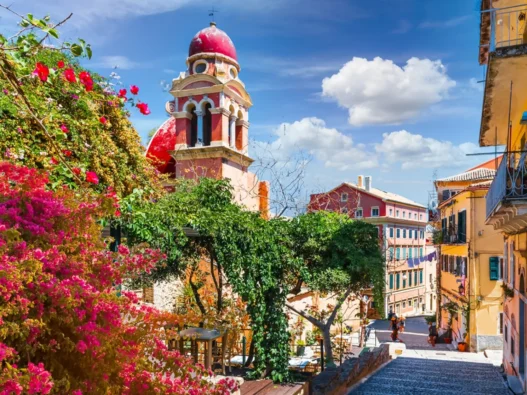
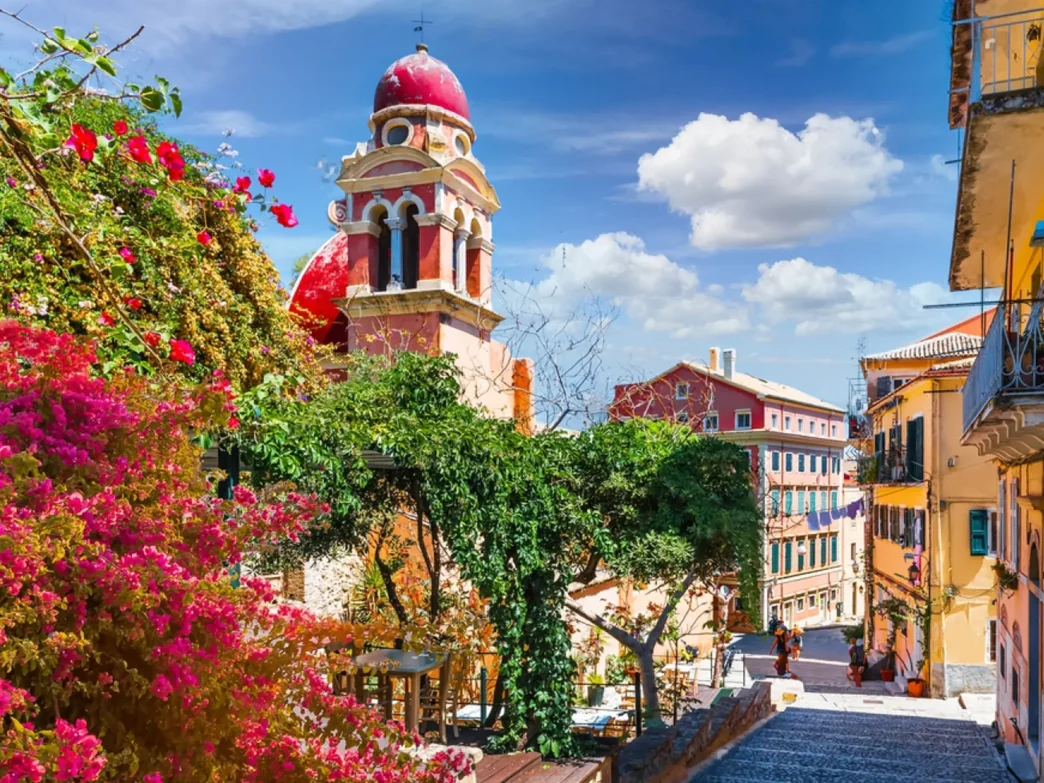
The area of Spilia is one of the most tourist and traditional districts of Corfu Town at the same time. The wider neighborhood offers important sights that testify to the great history and influence it has had on the city. Combining architecture, culture, and the sea, Spilia continues to enchant locals and visitors alike to this day.
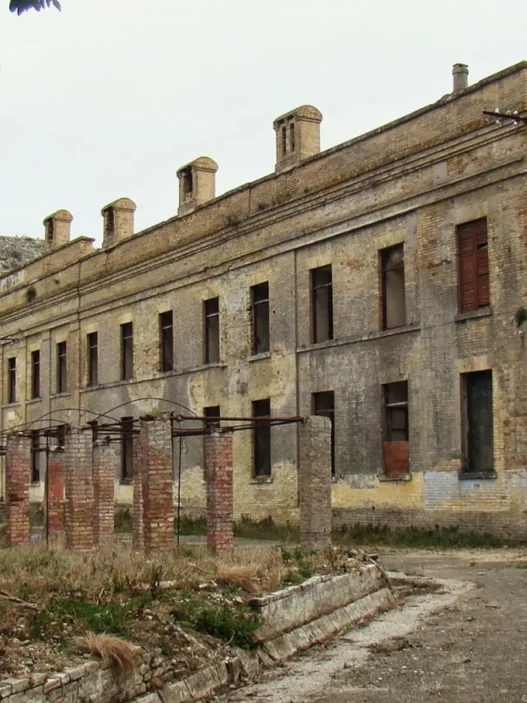
The history of the district, more or less as expected, begins with the gradual development and fortification of what is now the old town. Being essentially the main port of the city, the area developed commercially and economically, reaching more and more residents, thus sharply increasing its importance for the broader city. Its name originates from the small cave at the foot of the new fortress. Therefore both the wider area, the barracks, and the gate that stood on the site adopted the same name. Today, the gate of the Spilia is the only surviving one of the four gates that existed along the fortifications of the city, now functioning as a simple passage. Right next to it stands the building complex of the former barracks, which would accommodate up to 2,000 people.
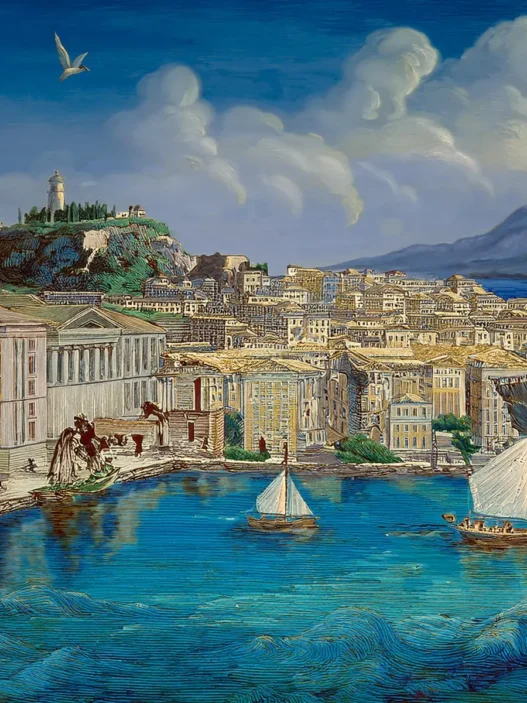
The defensive importance of the region gradually declined, and it essentially acquired a commercial character. With the arrival of the British on the island, the famous covered market of Markas was built in the area, a unique commercial center that gave new life to the place, until it was demolished in 1941, right after the Italian bombing. Thus, little by little, Spilia acquired its present form and function as a district, providing a multitude of opportunities for locals and foreigners alike. Since it is located just a few meters from the old port, it hosts several traditional taverns and restaurants that allow visitors to taste and get to know Corfu’s culture. Combined with the hundreds of shops, Spilia is a lively area of Corfu town that still surprises to this day.
If you find yourself in the area, you should not miss visiting some of its most notable sights. Perhaps the most important is the Holy Metropolitan Church of Corfu, dedicated to the Holy Virgin Mary “Spileotissa,” St. Vlasios, and St. Theodora. The well-known “Metropolis” was built around the 16th century and was essentially the merger of the two previous churches, St. Vlasios and the Holy Virgin Mary of Sieleotissa. In the Church, you will have the opportunity to admire the unique architecture and decoration. You will also find the relics of Saint Theodora Augusta, restorer of the Holy Icons and wife of Emperor Theophilos.
Just before the imposing staircase leading to the Metropolitan Church, the old courts of Corfu are located. This spot was used to house the Venetian granaries, which later gave way to residences and shops. The current building was constructed in 1935-1938 and was originally a branch of the National Bank of Greece. It is designed in classical style with an Ionic Stoa on the floor, being another point of interest in the area of Spilia.
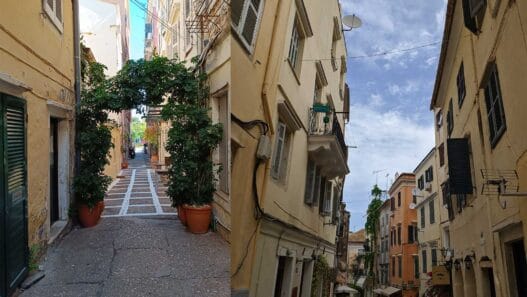
Through the narrow streets, known as “Kantounia,” if you are lucky, you will have the opportunity to discover one of the most picturesque squares of the old town. This wouldnt be other than Lemonia Square, whose name dates back to the Venetian occupation. Specifically, the street of Agia Theodora that started from this square was called by the Venetians “Calle Lemonia,” translating to the street of lemons. Today, this historic square attracts visitors for the unique atmosphere it offers.
The district of Spilia combines some of the most distinctive features of Corfu town to the fullest extent. The architecture, culture, and general temperament of the area make up a unique combination that no one should miss. From the leisurely walks under the New Fortress and the gateway of Spilia to the modern luxury restaurants, the area is a perfect place for touring and exploring.