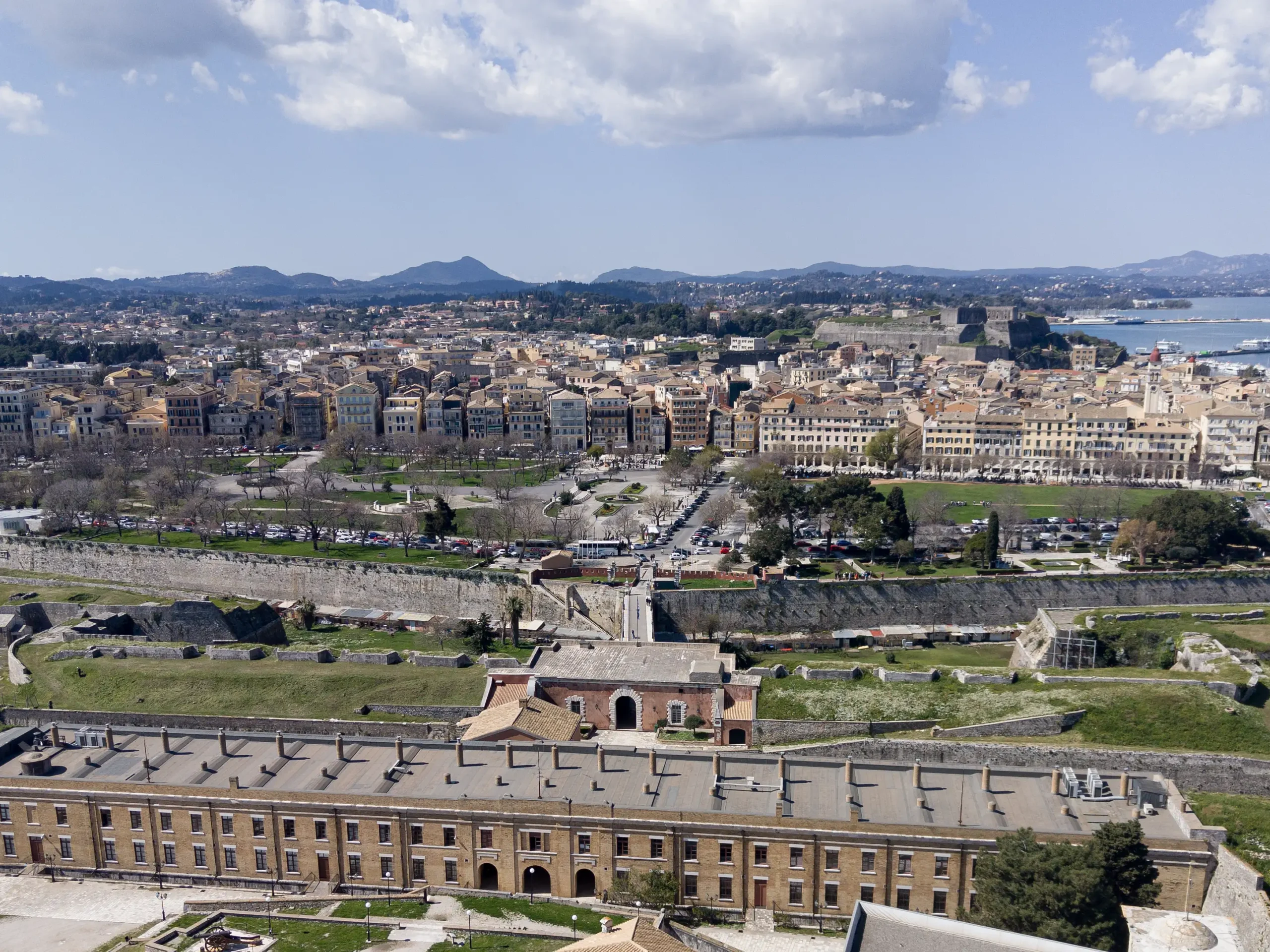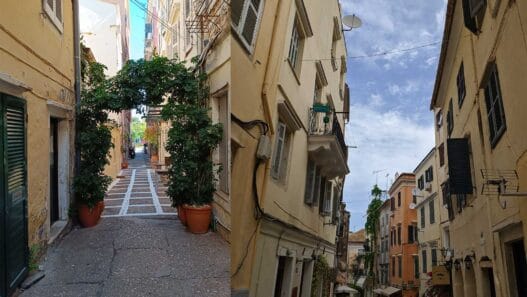



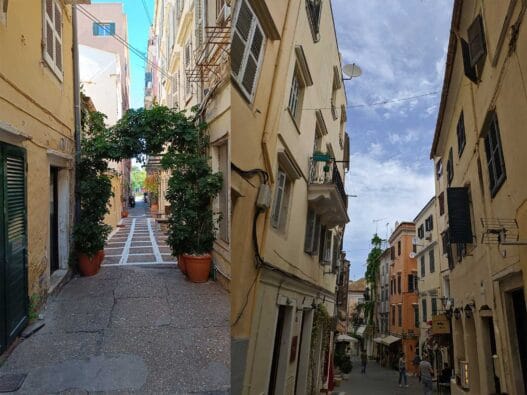
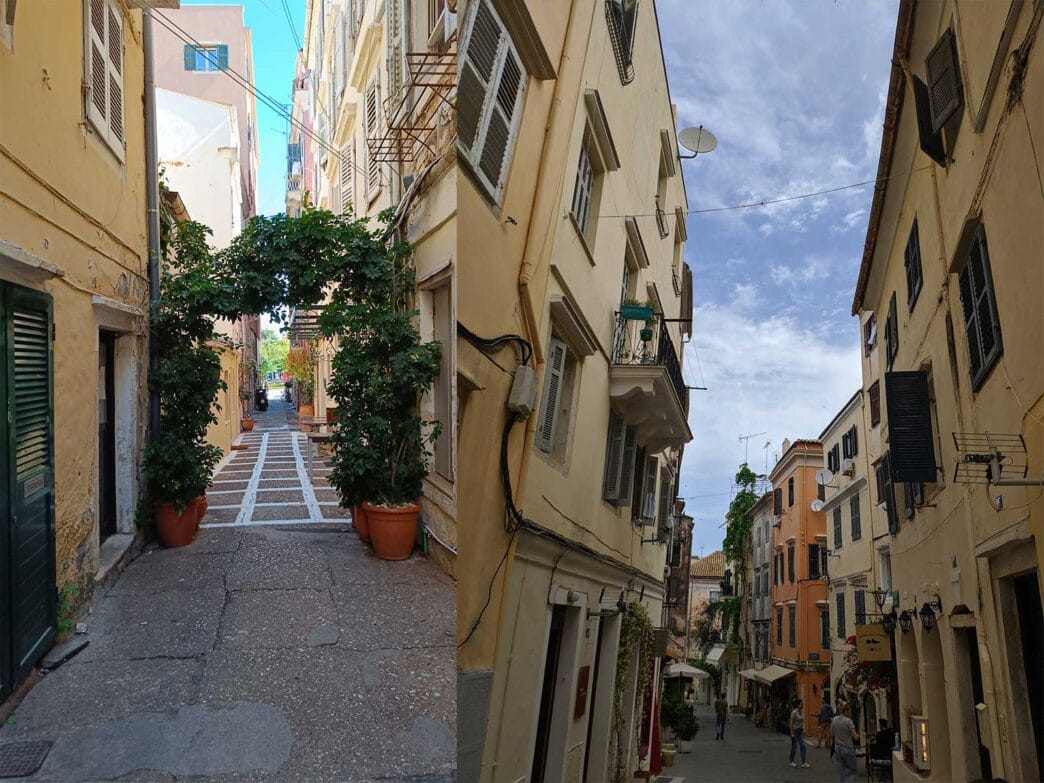
The word kantouni refers to the narrow streets that run from end to end through the old town of Corfu and some of the oldest and most traditional villages of the countryside. This unique feature has been around for centuries and has a very good reason to exist. Kantounia have been and still are today, a meeting point, creating stories and memories.
The entire old town of the island is a labyrinthine maze of narrow streets winding intricately through the tall, aged houses. The existence of the kantounia is parallel to that of the town itself. While building it, the Venetians chose to construct the houses so close together that in the event of an invasion within the urban fabric, enemies would not be able to maneuver quickly and in large numbers, thus making their movements more difficult. Some of the city’s narrowest kantounia are only a few centimeters wide, where only one person can cross them at a time. Thus, based on this tactic, the whole of the old town of Corfu was rebuilt, acquiring, apart from a defensive advantage, a particular architectural style.
The kantounia entered well into the life of Corfiots and are still a point of reference today. One of the most famous kantounia is the “Platy Kantouni” (wide kantouni). This one is located in the district of Porta Remunda and has its beginning at the Ionian Parliament and its end at the Spianada Square. As its name proudly declares, the Platy Kantouni is the largest in width in the city and could practically be paralleled with a one-way street. This particular street has a unique history. In the past, it has housed vital services and infrastructure of the town, and today it is a road of major tourist interest. Around it, there are various restaurants and traditional taverns that invite visitors to visit this part of the city to get to know the culture and tradition of Corfu differently.
Equally well-known and admired is the Kantouni of Bizzis. This one maintains the standards of the narrow street and is located next to one of the most central streets of the old town in the district of Agioi Apostoloi. The Bizzi’s Kantouni takes its name from the mansion of the homonymous family, whose imposing stroll can still be seen today at number 22. This is one of the oldest and most beautiful examples of 17th and 18th-century architecture. At its top stands the so-called “murioni” a carved head which was intended to prevent evil spirits and intruders from entering the house. Today, Bizzi’s Kantouni is an ideal choice for those who wish to enjoy their coffee or lunch lost in time. The shops on this particular street maintain an extraordinary aesthetic and invite visitors to experience a different experience that will surely be unforgettable.
The so-called “Kantouni to Ayiou” (Saint’s Kantouni) is located next to the Church of the patron saint and protector of the island, Agios Spyridon, and is one of the most beautiful in the entire city. One end of it touches the Campiello neighborhood and the other leads to the famous Liston. The stunning Church of Saint Spyridon, with its impressive 40-meter-high bell tower, adds a unique charm to the kantouni, transforming it from a relatively narrow street into a magical place. Along its length, visitors will have the chance to purchase souvenirs of their visit to the island and explore some of the other kantounia that wind through the rest of the city.
The importance of the kantounia has been a catalyst for the tradition and culture of Corfiots, and not without reason. These narrow streets brought the inhabitants of the houses closer together, introduced them to each other, and created relationships, friendships, and even enmities. The kantouni was and still is a point for “kalabouri” (chatting) and gossip, as well as a meeting point, especially in the earlier years when most of the residents knew the place names of the town. Besides, it is no coincidence that in the traditional Corfu Petegoletsa (improvised comedy performance of the Carnival), much of the dialogue and sketches take place in a kantouni of the old town.
Corfu’s everyday life is still unfolding around the kantounia. All the shops and houses of the urban fabric are located next to them and constantly interact with each other. Residents and visitors cross them daily and create memories that enrich their long history.