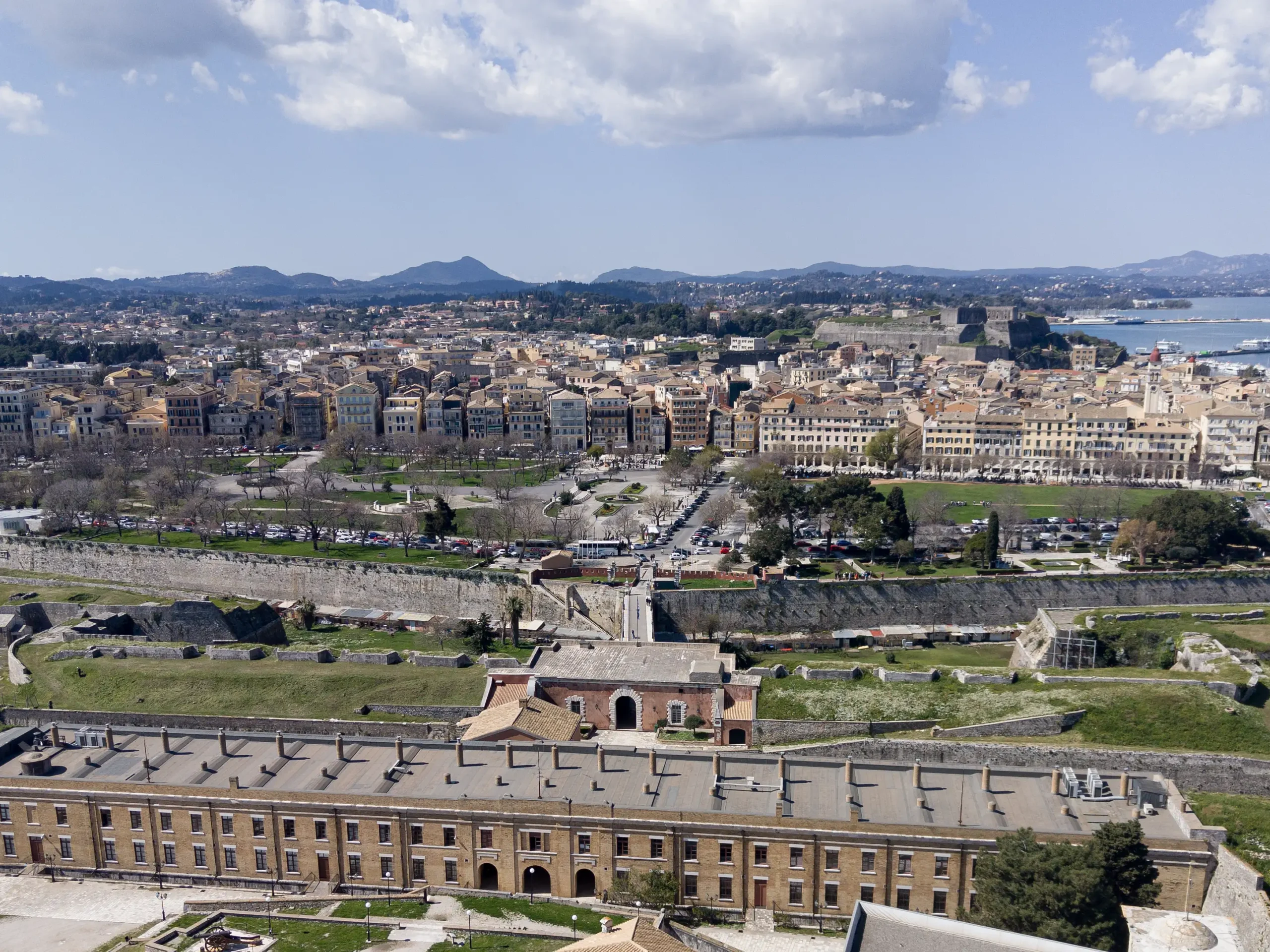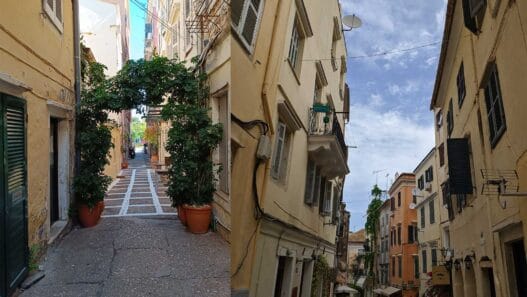



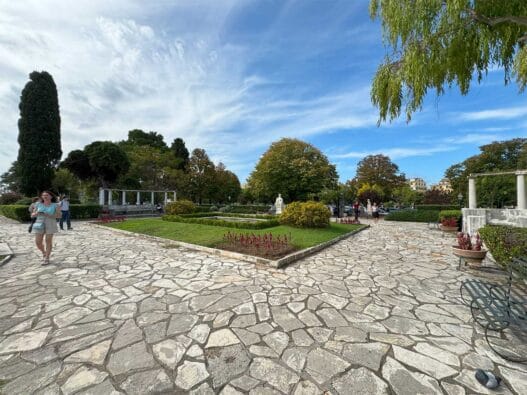
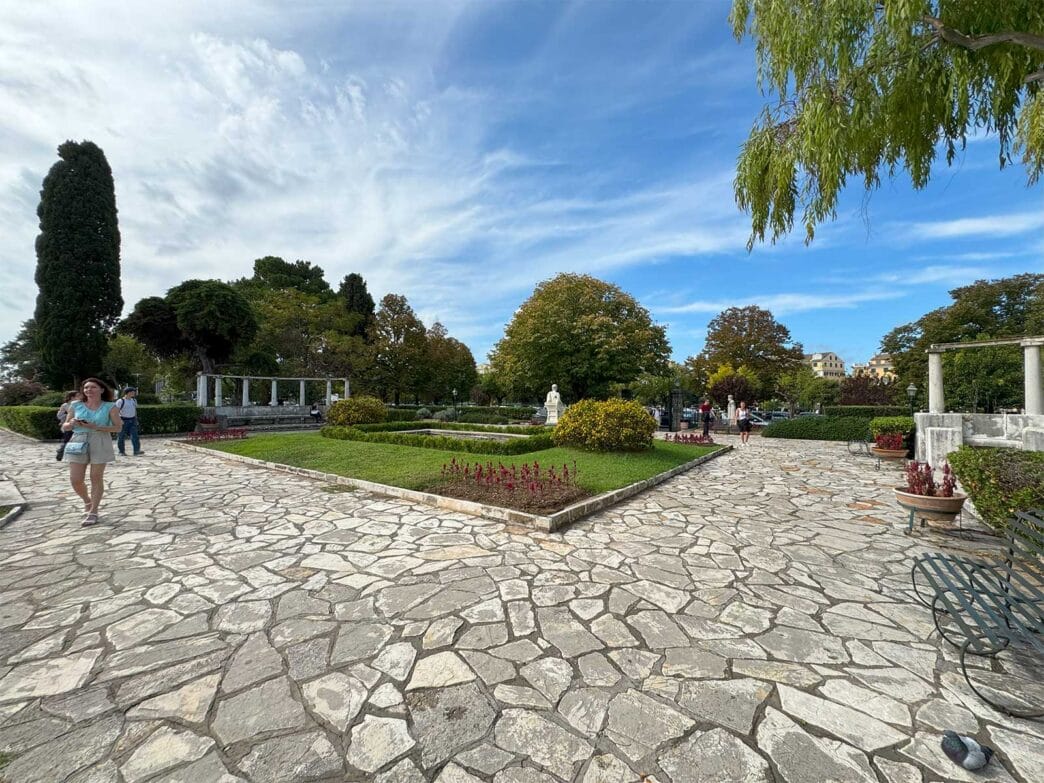
Boschetto is a beautiful small grove on the eastern side of Spianada Square. Its name originates from the translation of “small grove” in Italian and is strongly reminiscent of the famous Renaissance gardens. Boschetto is an ideal spot for a walk but also an excellent choice for children’s entertainment, as the northern part of it is designed as a playground.
The Boschetto, like the rest of Spianada, was formerly part of the open area that the Venetians created in case of a battle within the city. Gradually, with the technology of war developing, the location acquired a different character and gave the citizens of Corfu the opportunity to walk and relax between the city’s historical center and the Contra Fossa, the moat of the Old Fortress. This small garden is home to statues of vital personalities who either came from or played a pivotal role in the history, culture, and civilization of Corfu.
The largest of the statues is located on the south side of the Boschetto and, specifically, near the entrance of the Old Fortress. This is none other than the adriant of Marshal Johann Matthias von der Schulenburg, the German general called upon by the Venetians to face the Ottoman Empire during the siege of 1716. Schulenburg’s name is well known in Corfu as he played a catalytic role in the outcome of the siege, and also in the subsequent fortification of the city. The enormous contribution of the German marshal did not go unnoticed by the “Most Serene Republic, ” which commissioned Antonio Corradini to build the statue, which is the only one dedicated to a living non-Venetian general.
Passing the southern entrance to Boschetto, we find the monument to Lawrence Durell, and a little further on, we see that of his brother Gerald. The Durrells were writers, naturalists, and great lovers of Corfu. They lived on the island from 1935 to 1939, recording essential facts about both the culture and civilization and the nature of Corfu itself. Among the statues of the two brothers is that of Guilford. Lord Guilford was an important philhellene and founder of the Ionian Academy, the first university institution in modern Greece. His statue was sculpted by K. Apergis in 1883.
Another statue that you will find in the small garden of Boschetto is that of Lorenzos Mavilis. Although not among the well-known, Lorenzo Mavilis was a Greek-Spanish lyric poet and composer. Mavilis’ contribution to the writing of sonnets was significant, as he is considered the most influential throughout Greece. Near the statue of Mavilis is that of Konstantinos Theotokis. This Corfiot writer and translator was an important representative of the Ionian School. Having translated the works of William Shakespeare, Johann Wolfgang von Goethe, and others, he is one of the most influential personalities of the literary and artistic life of Corfu.
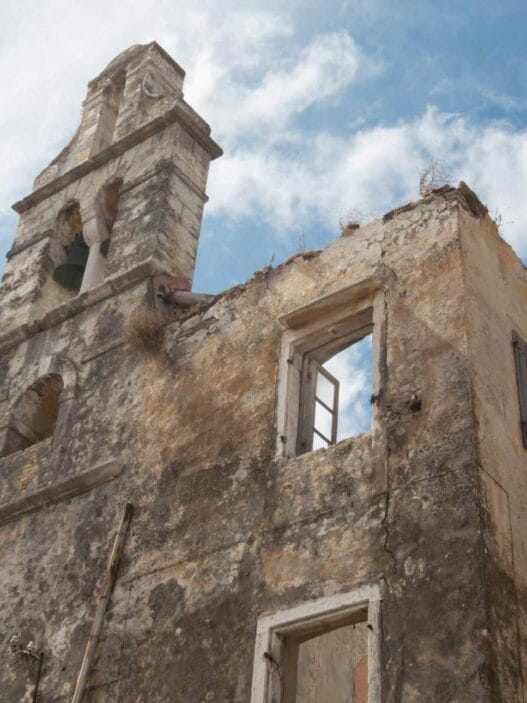
Just a few meters from Boschetto Garden stands the small but beautiful Church of the Virgin Mary of Mandrakina. The church was built in the mid-16th century and got its special nickname because of the miraculous finding of the icon of the Virgin Mary in the sea area near the small harbor of Mandraki in the Old Fortress. The church of Panagia Mandrakina took its present form after the bombings of World War II after being severely damaged.
A walk in Boschetto gives Corfiots and visitors to the island the opportunity to relax by taking a unique walk in one of the most historical places on the island. Furthermore, this small grove gives us the opportunity to approach important personalities of the past, so that we get to know better the culture, civilization, and history of Corfu.