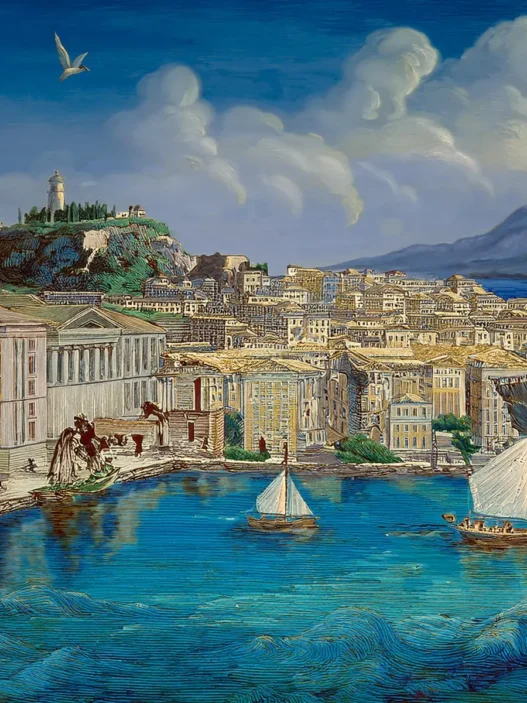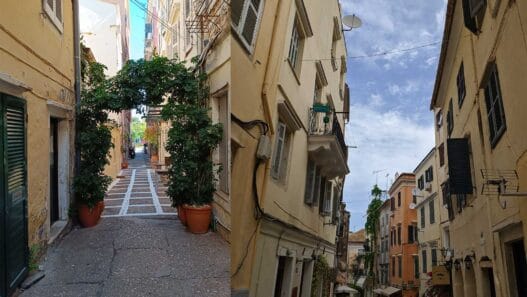

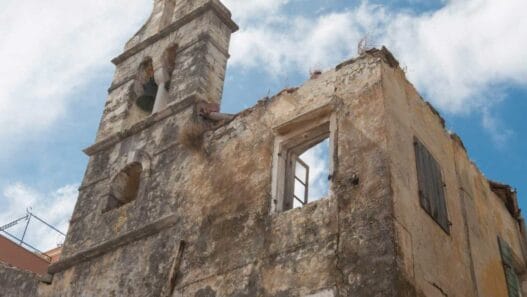


Porta Remunda is one of the most famous and picturesque districts of Corfu Town. It is located in the southernmost part of UNESCO’s World Heritage Site and is home to some of the most important and historic buildings on the island.
The neighborhood label was based on the name of the neighboring gate that belonged to the Venetian walls, Porta Raimondo. The importance of the gate was such that it gave its name to the broader neighborhood. Porta Remunda has all those familiar and distinctive features of the old town. The narrow streets, the tall houses, and the numerous hanging laundries adorn the area, exuding an air of different times. Nevertheless, the district of Porta Remunda is also distinguished by its symmetry. Structured on an east-west axis, with only one street crossing it on the north-south axis, it is of particular architectural interest as it combines the familiar chaotic nature of the old town with the symmetry of a well-planned city.
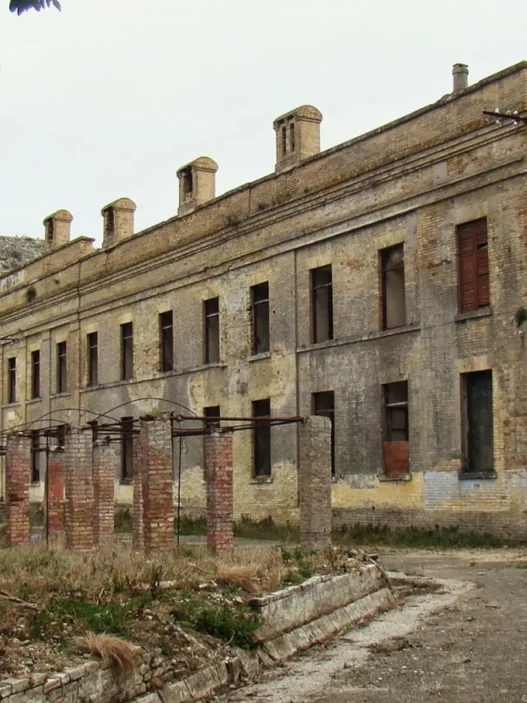
A little further south of the district and now hidden behind the famous and luxurious Corfu Palace Hotel is the homonymous bastion of Raimondo. This particular structure of defensive importance is one of the few remaining parts of the old fortification of the town. It is an ideal destination for lovers of architecture and fortification art.
A stroll through the neighborhoods of the area will allow you to discover little secrets and treasures capable of surprising you. One of them could be none other than the Ionian Academy. The Ionian Academy was the first university-level school in the newly established Greek state, having been founded just three years after the beginning of the Greek Revolution. The building of the Ionian Academy is characterized by the unique, modern architecture of its time, and it is worth mentioning that it was burned and rebuilt from scratch after the bombing of Corfu in 1943.
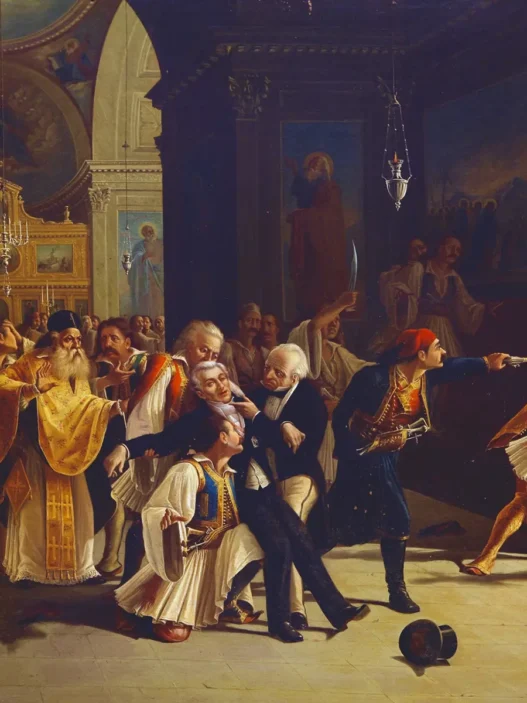
Directly opposite the Ionian Academy, in a truly idyllic spot, overlooking the Old Fortress and Spianada Square, stands the statue of the first governor of Greece, Ioannis Kapodistrias, a monument that constantly reminds the immense history of Corfu and Greece. Continuing a little further down and right next to the seafront, one will find the NAOK, the Nautical Athletic Club of Corfu. The club has been housed in the area since 1935, spreading the love for nautical sports to the inhabitants of Corfu.
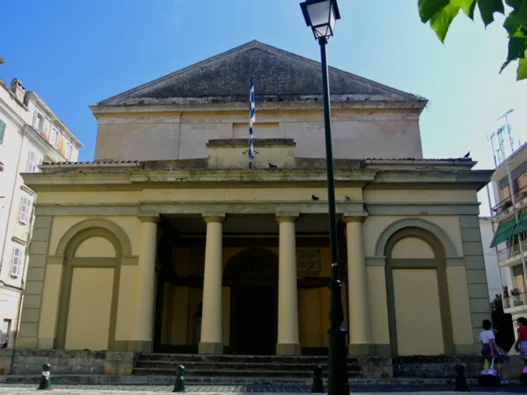
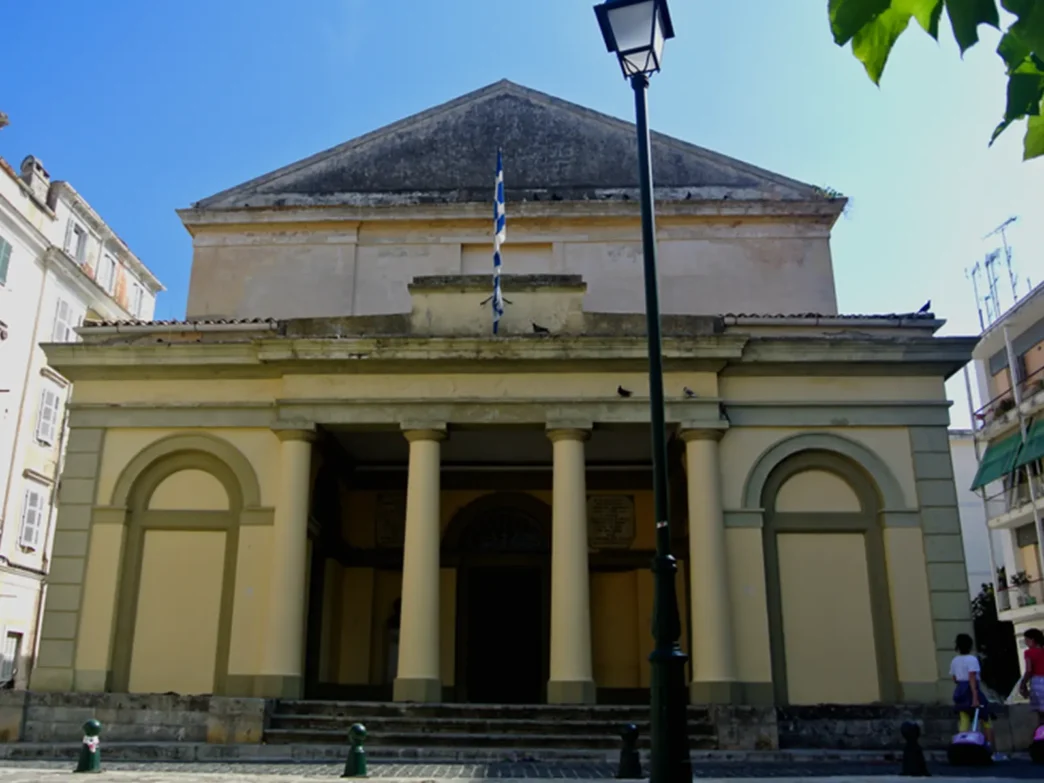
Another historical building of the district of Porta Remunda is the one that housed the Ionian Parliament. Having been built in 1855 in neoclassical architectural style, it has in its biography one of the most vital moments of Corfu’s and Greece’s history. In 1863, in the building of the former Ionian Parliament, the union of the Ionian Islands with the rest of Greece was voted. This event changed the history of the island and the country forever. Nowadays, the building of the Ionian Parliament serves as a gallery, while it also caters to the needs of various cultural associations and choirs of the town.
Nowadays, the district of Porta Remunda is an ideal area for Corfu’s architecture, history, and culture lovers. The broader neighborhood offers many opportunities to locals and tourists alike, inviting them to get to know better the Corfiot cuisine and tradition. The district is also suitable for those who wish to experience a different side of Corfu town, away from the busy areas of Liston and the wider tourist area of the historic center. The “Platy Kantouni,” or as it is officially known as Moustoxydou Street, is one of the main arteries of the district and leads to Spianada Square. It is named so, as it is essentially the widest street in the entire district. If you wish to visit Porta Remunda and discover its secrets, then “Platy Kantouni” is an ideal way, as to the left and right of it you will be able to tour one of the most extraordinary areas of Corfu’s old town.