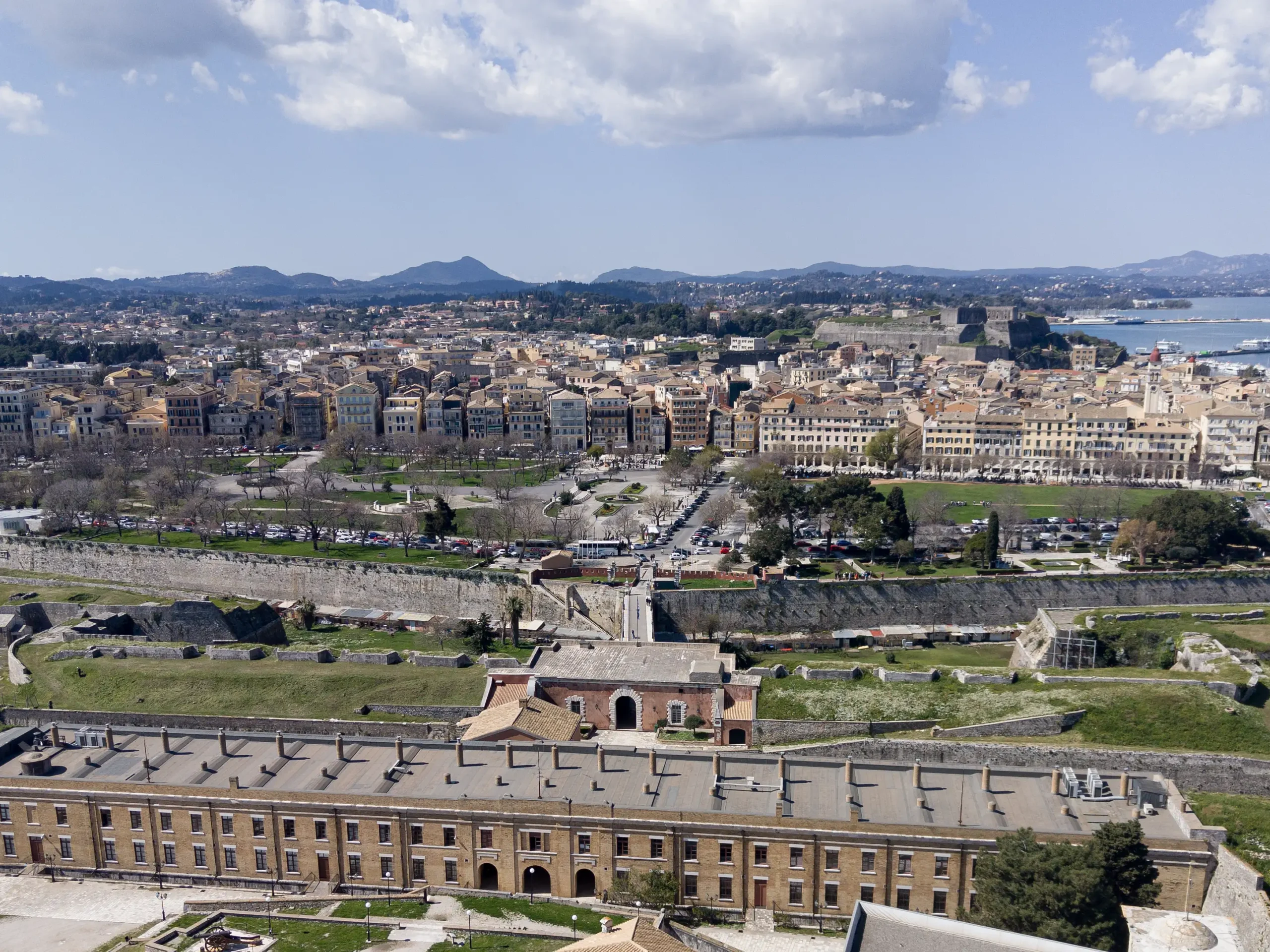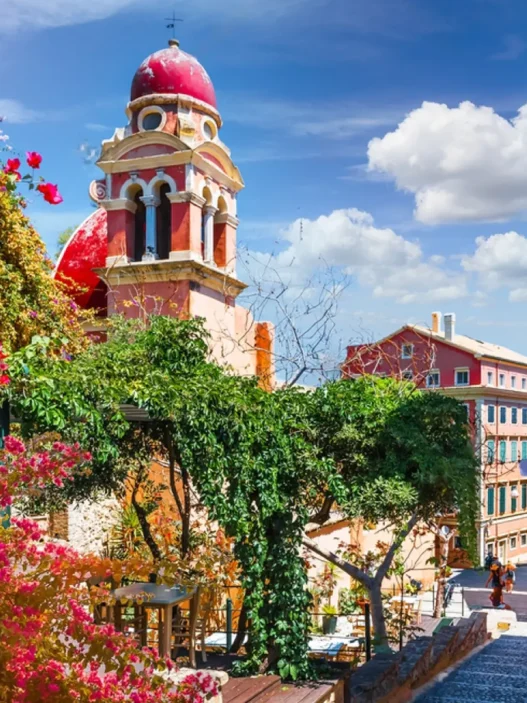

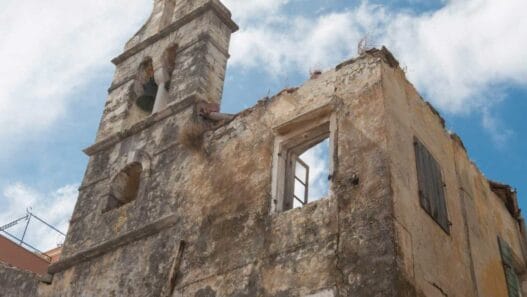


The New Fortress, also known as the Fortress of St. Mark, is built on the hill of the same name and is located in the northwestern part of the Old Town. It is now a unique part of Corfu and an extraordinary example of architectural and fortification art. The importance of the New Fortress has always been purely defensive as it was built by the Venetians as a reference point for the city’s fortifications at the end of the 16th century. The New Fortress may often be neglected compared to the Old Fortress, but it has played a catalytic role in the history of Corfu.
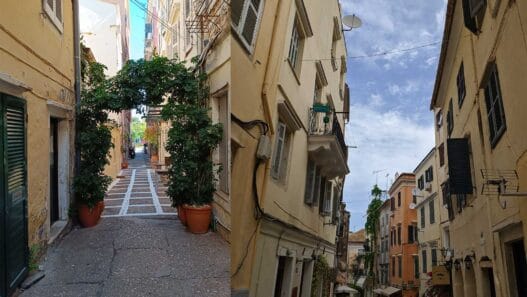
In the northwestern part of the old town one will discover, almost buried in the urban fabric, one of the most crucial defensive additions that established Corfu as an insurmountable obstacle in the eyes of would-be conquerors. The New Fortress originally consisted of the two semi-bastions of the Six and Seven Winds. At the same time, it was later joined by the originally autonomous and part of the outer fortifications, the Bastion of Scarpon. In the area around the New Fortress, apartment buildings, shops, and stores have been developed, while on the northern side, part of the old port of Corfu is located. It is also worth mentioning that the Corfu Naval Station is housed in the area.
Furthermore, it should be emphasized that many people consider the bastion of Saradaris as part of the New Fortress, which is false. At this point, we should mention that the area around the New Fortress has been significantly different during its operation. No building existed beyond the bastion of Scarpon, while the northern walls and low fortifications, such as that of “Punta Perpetua” (Eternal Edge), ended directly in the sea.
The New Fortress took its final form at the end of the 19th century after the British ceded Corfu to the then-newly established Greek state. Consequently, the New Fortress consists of the bastions of Six and Seven Winds, Scarpon, and Tenedos, while the British barracks still stand on top of it. This unique fortification has an excellent view of the entire town of Corfu and the surrounding areas. A walk to the top will help you understand even better the boundaries of Corfu’s old town and see some more remnants of the fortifications. On the other hand, you will have the opportunity to see the small island of Vido and Pantokrator’s Mountain in the north and northeast of the island.
The New Fortress has played a vital role in the history of Corfu and the life of Corfiots. Many times, it has been a point of reference, especially during sieges, while in the famous siege of 1716, it was “The mother of all battles” and even threatened to be entirely occupied by the Ottomans, with the bastion of Scarpon falling, even if only briefly, into their hands. In late history up to the present day, the New Fortress has been a refuge for the Corfiots, thus maintaining a perpetual connection with the island’s inhabitants.
In conclusion, we recommend you visit the New Fortress of Corfu and get to know a not-so-well-advertised aspect of Corfu’s history. A short walk through the narrow passages and imposing walls up to the top, where the British barracks building dominates, will take you back to one of the most glorious periods of Corfu’s history. Finally, it is worth mentioning that for a few months now, a significant restoration effort of the southern part of the bastion of the Seven Winds has begun following the approval of the studies by the Central Archaeological Council. This project is part of the broader effort to restore and enhance the monuments of the old town of Corfu. Its goal is not only to preserve but also to promote these unique buildings of architectural and fortification art.