


Corfu has important figures who have played an important role in the history of the island, the rest of Greece, and the world in general. The period of prosperity that Corfu experienced during the Venetian occupation and the more modern times of prosperity played a pivotal role in the development of residents with high education and knowledge that contributed significantly to the place.
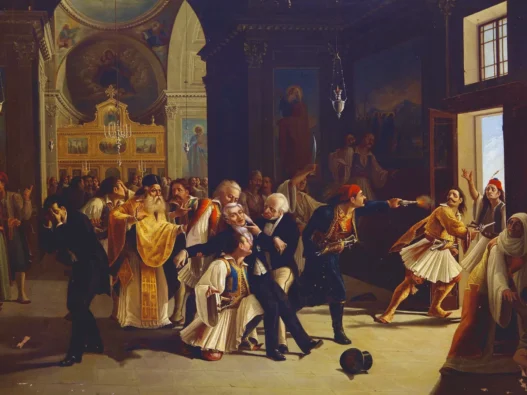
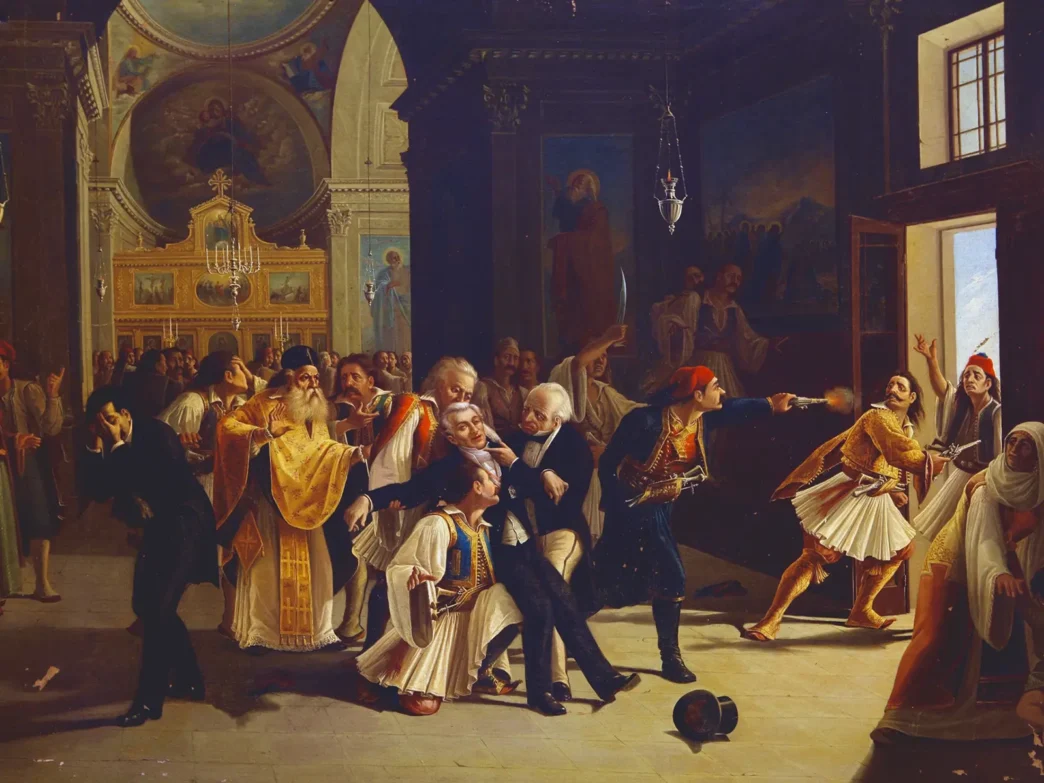
The most important personality of Corfu is undoubtedly Ioannis Kapodistrias. Born in 1776, he studied in Venice and Padova until 1797, when he returned to his place of origin. Here, Kapodistrias worked as a doctor, often without remuneration, as he provided his services even to the poorest of his fellow citizens. From 1801 until 1807, he had a direct relationship with the Ionian State, and in 1808, he accepted to serve Tsar Alexander of Russia. Intending to actively help Greece from his position, Kapodistrias was a significant regulator of events throughout Europe until the beginning of the Greek Revolution, as he influenced decisions always with the good of Greece in mind. In 1828, Kapodistrias arrived in the newly established Greek state with the aim of ruling, initially wanting to create a self-sufficient and self-reliant state. His political opponents, having completely different beliefs and aspirations, assassinated him on September 27th, 1831 outside the Church of St. Spyridon in the city of Nafplio.
Corfu has a great musical tradition. This could not but create some essential figures. Nikolaos Halikiopoulos-Mantzaros was born on October 26th, 1795, on the island. He studied in Italy and, more specifically, at the Conservatory of Naples, demonstrating his immense talent. Returning to Corfu permanently in 1826, he started writing various works. Mantzaros’ best-known work is none other than his setting of the National Anthem of Greece, while also being the first Greek opera composer in Italian.
Furthermore, Mantzaros was the first “Artistic Director” of the Corfu Philharmonic Society, founded in 1840. Many other Corfiot musicians were to follow in Mantzaros’ footsteps, making Corfu even more famous for its impressive musical tradition. Exceptional musical personalities of the island were, among others, Spyridon Samaras, composer of the Olympic Anthem, Napoleon Labellet, the first to attempt to create a Greek melodrama, and Spyridon Xyndas, who composed the first opera in Greek.
Apart from the crucial personalities of music, Corfu has been fortunate enough to have in its ranks some vital names of literature and arts. One of them is Konstantinos Theotokis. He was born in 1872 in Corfu and was a writer, having been involved in prose and poetry. He also translated the works of noteworthy foreign writers such as William Shakespeare, Johann Wolfgang von Goethe, and others. Some of Konstantinos Theotokis’ best-known works are “The Price and Money” and “The Slaves in Their Bonds.”
Corfu has produced characters who have been protagonists in their field still to this day. A shining example is Rena Vlahopoulou, the well-known Corfiot actress, who made the island of the Phaeacians known throughout Greece through her films. Similarly, Giorgos Katsaros composed hundreds of works for numerous performances and movies, while he became particularly known for his unique skill with the saxophone. On the international level, the well-known singer Vicky Leandros was born on August 23rd, 1949 in Paleokastritsa, Corfu, and moved to Germany with her parents in 1959. Gradually, her career on the art scene began with successes that established her as a highly successful singer.
Corfu, having been influenced by a multitude of different cultures, ideas, and opinions, has enabled many of its inhabitants to develop to such an extent that they became a reference point not only for the island itself but also for Greece and the world in general.