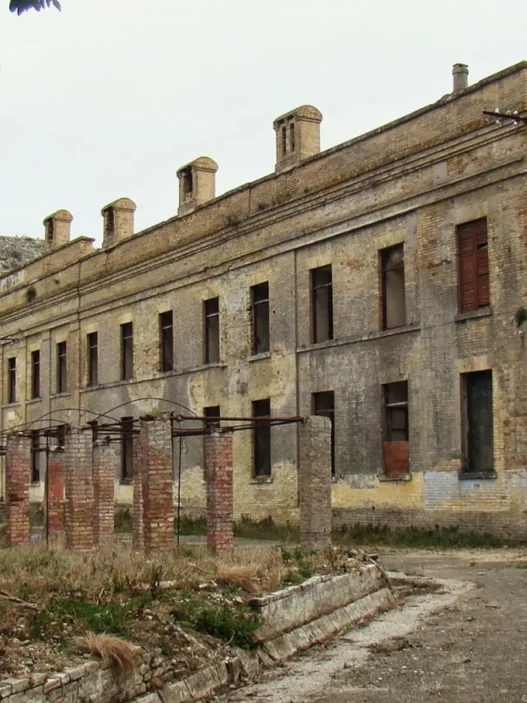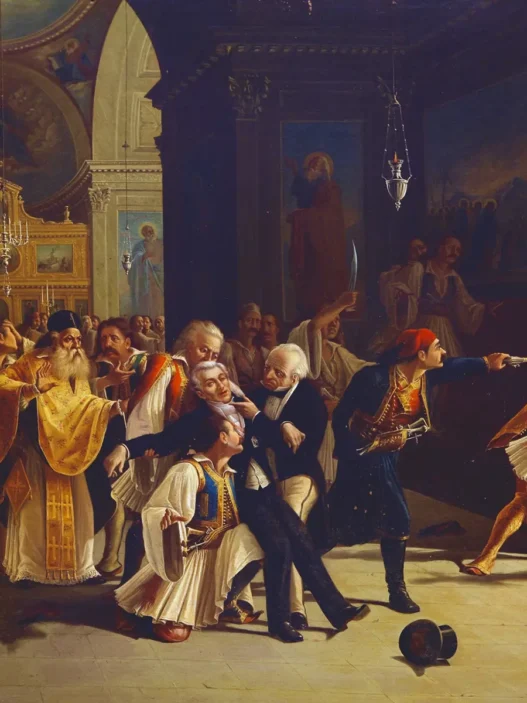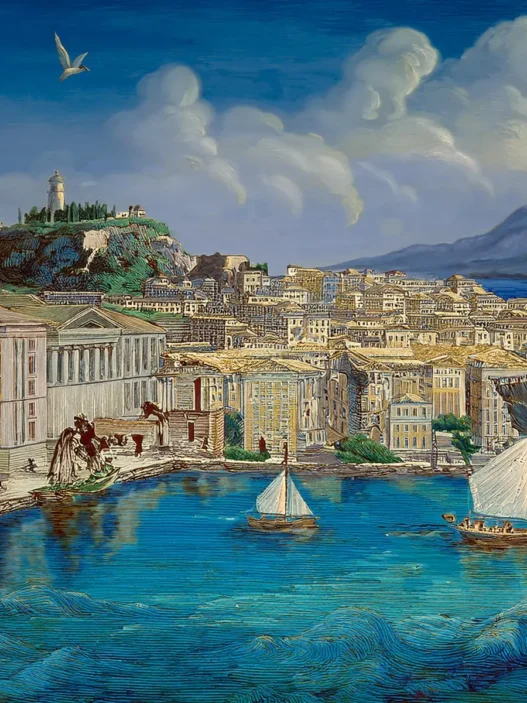





The beginning of the 19th century found Venice entirely weakened, signing the Treaty of Campo Formio, during which the Ionian Islands, as well as its possessions in Epirus, passed to the French democrats. The ideas of the French Revolution, known throughout Europe at the time, could not but resonate with the people of Corfu. The inhabitants of the island welcomed the French with great enthusiasm. However, the initial joy did not take long to give way to doubt and gradually to hostility, as new taxes and looting upset the initial mood.
The dissatisfaction of the inhabitants of the Ionian Islands and Corfu was exploited by the Russo-Turkish alliance, which occupied the island in 1799 after a four-month siege. The most important event during this period was the establishment of the Ionian State until 1807, the first Greek state after 1453. However, French occupation was again imposed on Corfu by the self-proclaimed emperor Napoleon. These seven years were marked by works that renewed the image of the city and its fortifications to a great extent. During this time, Liston was built, and the Ionian Academy, the first university in modern Greece, was founded.
Gradually, and as Napoleon’s power diminished, the Ionian Islands and Corfu became an independent state, this time under the protection of England. Although the English initially took an anti-Greek stance, they later re-established the Ionian Academy, extended the city’s boundaries, and created the Palace of the Bailiffs, which housed the newly established Order of Saints Michael and George. Corfu passed after negotiations to the sovereignty of Greece on May 21, 1864, marking the reunification with the homeland.
In the following years, Corfu would become a point of reference, especially during World War I and the Balkan Wars. During World War II, it was repeatedly bombed, resulting in the loss of many historical documents, buildings, and monuments. September 13-14, 1943, marked some of the darkest days in Corfu’s history. After the end of the domestic Greek unrest, Corfu began to develop in areas that had not been widely known until then. The most important of these was tourism. The development of tourism on the island was firstly based on the well-known Club Mediteranee, which attracted an increasing number of visitors to the island. Tourism thus became one of the main occupations of the island’s inhabitants, whose standard of living rose in conjunction with the development of letters and arts and with the help of the Ionian University.
The abandonment of the primary sector, which was the main source of employment for Corfiots for most of the island’s history, led to the partial abandonment of significant sources of income, such as olive groves or vineyards. However, the economic crisis of the last decade has brought significant challenges but also created new opportunities, giving the residents of Corfu, like those in the rest of Greece, new chances for development.
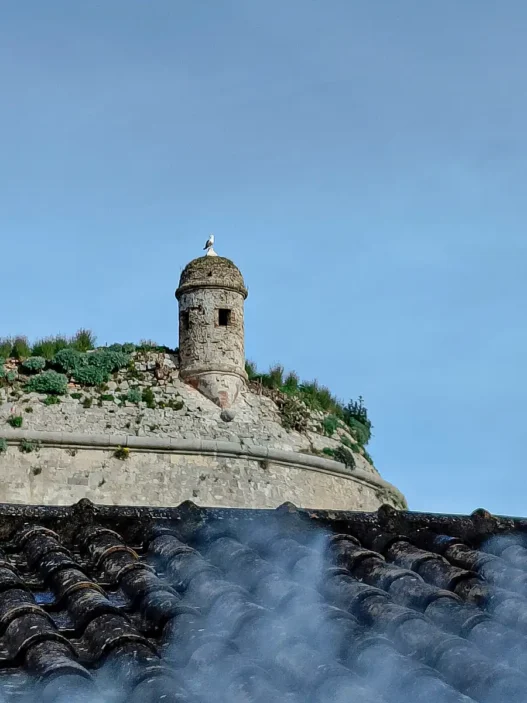
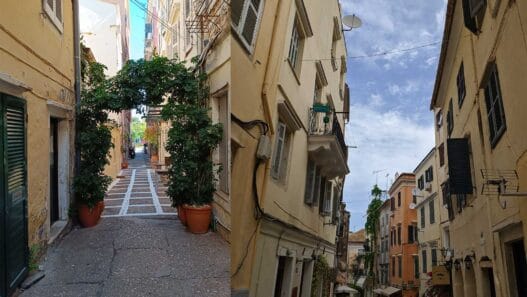
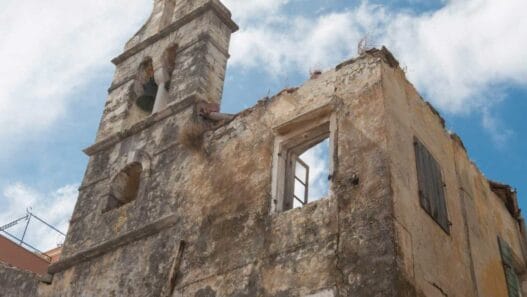
The island’s history is reflected in the buildings, customs, traditions, and temperament of Corfiots. Every aspect of the daily life of the inhabitants is more or less influenced by the many conquerors the island has had. A walk around both the city and the countryside is the best proof. The old buildings, inspired by Venice itself, the British palaces, the famous busy pedestrian streets that resemble some of those of Paris, and the residents themselves, with their well-known Greek hospitality and unique Corfiot temperament, make up a unique combination of treasure and culture that is hard to find elsewhere. Thus, the island of Corfu continues to develop based on the history and ideals it has adopted for hundreds of years.